Bed bug infestations in suburban Gwinnett County properties often originate through travel exposure, guest transit, or incoming package shipments, spreading rapidly through carpet tack strips and baseboard recesses. In…
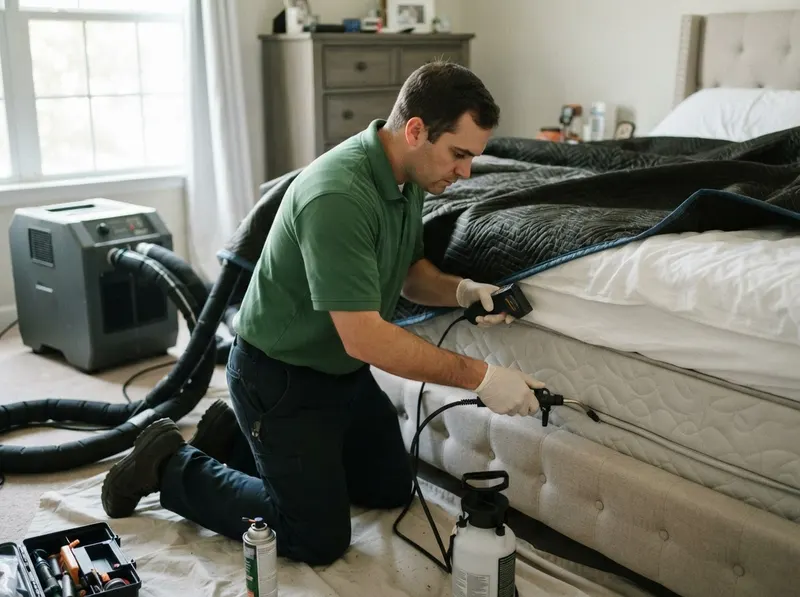
Bed bug infestations in suburban Gwinnett County properties often originate through travel exposure, guest transit, or incoming package shipments, spreading rapidly through carpet tack strips and baseboard recesses. In residential communities such as Rivermoore Park, Laurel Springs, and Edinburgh, large multi-level homes present unique void spaces behind trim work and electrical outlets where bed bugs harbor away from light. While store-bought foggers simply drive insects deeper into dry-wall cavities, industrial thermal remediation circulates forced dry heat across rooms using monitored ambient sensors, pushing temperatures past the lethal thermal point of 122°F where both adult insects and eggs dehydrate within 90 minutes.
Selecting the right remediation protocol depends on home construction, layout, and infestation severity. Whole-home heat remediation is ideal for large single-family properties with severe activity across multiple suites, as hot air penetrates directly through thick mattresses, sofas, and subfloors without requiring furniture disposal. Targeted chemical remediation suits early-stage localized introductions or containment in attached townhomes such as Suwanee Station, where shared wall assemblies make focused insecticide barriers and desiccant dusts behind outlet plates the practical choice. The operational trade-off centers on preparation and speed: thermal treatments require extensive staging, such as removing wax candles, cosmetics, and electronics, but achieve complete knockdown in a single 8-hour window, whereas chemical-only methods demand minimal initial staging but necessitate two to three follow-up inspections across 30 days to break the egg hatch cycle.
Technicians approach each property with discrete, unmarked vehicles to protect household privacy across neighborhoods like Olde Atlanta Club and The River Club. The remediation process follows four sequential steps: 1. Visual and acoustic inspection of all bedding, baseboards, and luggage storage areas to map infestation vectors; 2. Placement of industrial thermal fans and external heating units monitored via internal wireless temperature probes; 3. Maintenance of structural temperatures between 120°F and 135°F for at least 4 hours; 4. Precision micro-injection of non-repellent residual chemicals along carpet perimeters, door frames, and bed supports to prevent re-infestation from exterior transfers. This systematic approach ensures complete eradication without unnecessary property damage or lingering airborne odors.
Every job gets a firm, written price after a free on-site visit.
Tell us about your bed bug heat & chemical remediation job in Suwanee and we'll send a clear, written quote, usually the same day.
 Georgia Pine Pest Control